
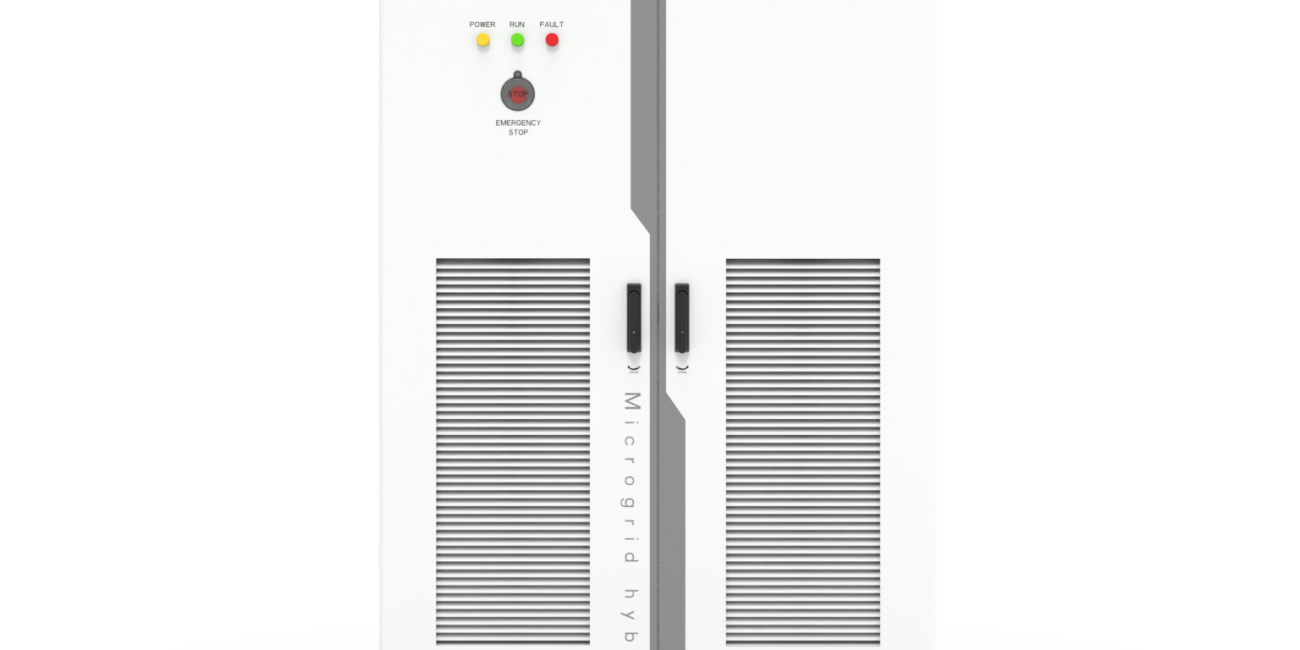
Lead — why this comparison matters
When hybrid systems run at small fractions of rated power, their Total Harmonic Distortion (THD) performance can swing from negligible to disruptive. This comparative piece looks at practical attenuation strategies across vendors and designs, starting from a straightforward product class: the hybrid inverter. I write from an editor’s bench with hands-on experience reviewing production teardown notes and lab logs, so the focus is concrete: converter topology, modulation approach, and the field trade-offs you’ll see in real installs.
Why low-load THD is not just an academic metric
At low-load thresholds, switching artifacts and control loop behavior dominate waveform quality. Total Harmonic Distortion matters because many utilities expect distribution-connected generation to keep voltage THD within roughly 5% at the point of common coupling; breaches cause protective miscoordination and customer complaints. Installations in urban microgrids and residential clusters have exposed these effects — operators notice THD rise during late-night minimal consumption windows, and the pack of complaints climbs faster than you’d think.
Comparative categories: topology, control, and passive mitigation
Vendors take three main approaches. First: switching topology choices like full-bridge versus multi-level influence base harmonic content. Second: control schemes — high-resolution PWM and refined inverter modulation with adaptive dead-time reduce harmonics dynamically. Third: passive harmonic filters or tuned LCL networks smooth remaining content. Each choice changes cost, efficiency, and low-load stability. In short: multi-level stacks + smart modulation often beat single-stage in raw THD, but they add BOM and firmware complexity.
Field tests and a real-world anchor
Lab curves tell one story; field pilots tell another. Utility teams in parts of California and southern Europe have flagged harmonics as the top power-quality headache at night for distributed PV clusters. Measured deployments repeatedly show spikes in odd harmonics during 5–15% load windows — largely a control-loop interaction under weak grid conditions. The lesson: pick hardware that’s validated under those low-power steady states, not only at rated load.
Common mistakes uncovered in production teardowns
Teardowns reveal repeatable errors: undersized snubbers, insufficient EMI suppression, and control firmware tuned only for mid-band efficiency. During production teardown, engineers should instrument for {main_keyword} and {variation_keyword} readings across the 0–30% load range. Too many designs optimize peak MPPT and leave low-power firmware in a default state — eso pasa. A quick firmware tweak to modulation or adding an LCL leg can cut THD substantially without changing the power stage.
How to evaluate hybrid pv inverter manufacturer offerings
Compare vendors on three pragmatic axes: measured THD at 5–20% load, documented behavior under weak-grid conditions, and firmware update cadence. Look for published graphs or test reports that show harmonic spectra, not just a single THD number. A strong supplier will discuss harmonic filter design, provide inverter modulation details, and show response to fast load transients. For those comparing brands, consider a hybrid pv inverter manufacturer that offers field-proven firmware and optional passive filter kits — that combination wins in tight neighborhoods.
Lessons, mistakes, and brands to watch
Many installers default to the cheapest inverter rated for peak kW and are surprised by night-time THD complaints. Avoid that trap: cheaper usually omits advanced inverter modulation and harmonic mitigation. Alternatives include mid-tier multi-level inverters or units that ship with configurable LCL filter options. Also check for firmware flexibility — some vendors let you tune switching frequency bands remotely, which is invaluable for on-site tuning — and saves a truck roll.
Advisory — three golden rules for choosing the right strategy
1) Require vendor-supplied THD spectra at 5%, 10%, and 20% load with grid-simulated weak voltage. That shows real low-load behavior.
2) Prefer inverter platforms that support adaptive modulation and field-upgradeable control firmware — fixes arrive faster than hardware swaps.
 3) Insist on a harmonics mitigation path: onboard multi-level topology or a documented LCL/passive filter option, plus clear commissioning procedures.
These metrics make procurement decisions measurable — and they point you toward vendors who solve the real problem, not just market it. — YUNT